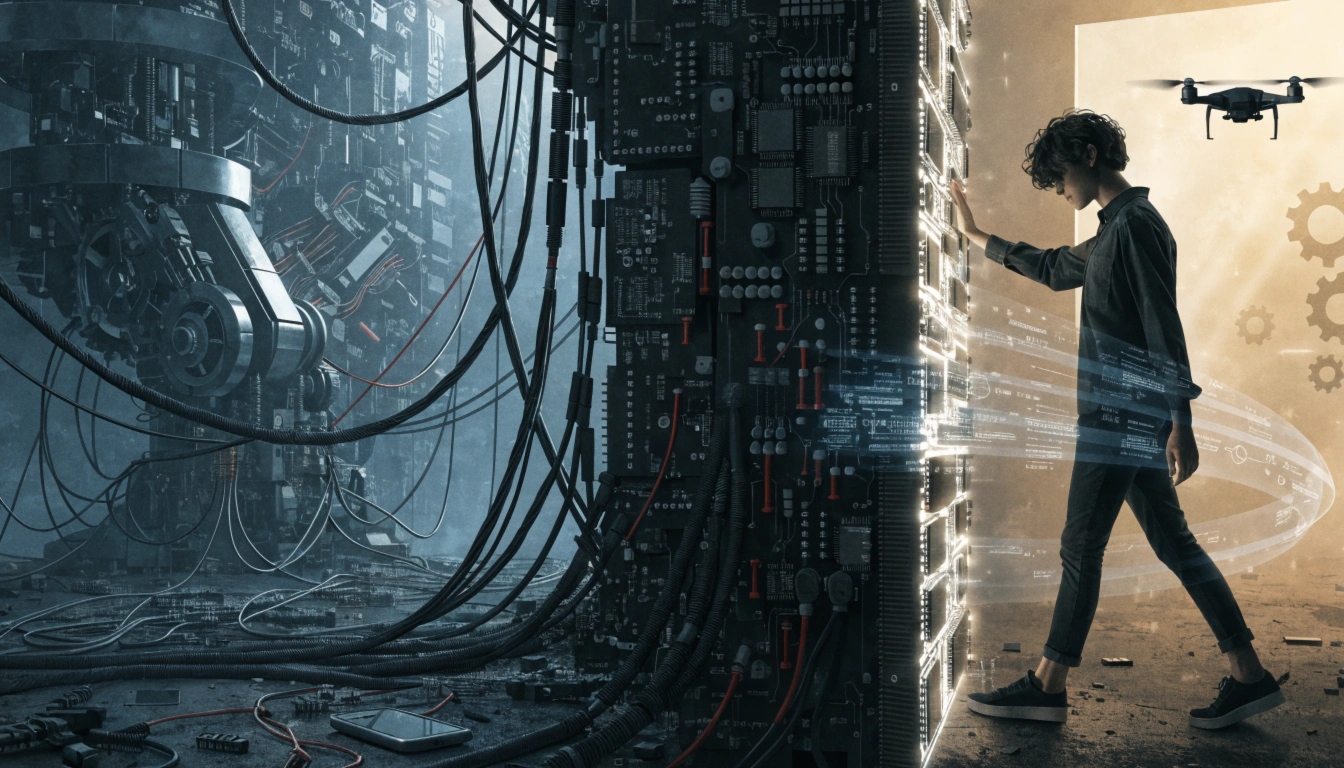
If you’ve ever read a story where a robot turns against its creator, or a character struggles to survive in a world run by machines, you’ve already seen character vs technology in action. This type of conflict happens when a character struggles against a machine, an invention, or a piece of technology that threatens their safety, freedom, or way of life.
It’s one of the classic conflict types taught in schools and used by writers everywhere, right alongside character vs nature, character vs society, and character vs self.
Quick Answer
Character vs technology is a type of external conflict where a person struggles against a machine, tool, or technological system. The technology might be dangerous, controlling, or simply misunderstood. This conflict shows up in books, movies, and games that explore how humans handle rapid change, automation, or artificial intelligence.
What Is Character vs Technology Conflict?
Character vs technology is one of several external conflicts, meaning the struggle happens between a character and something outside of themselves, not inside their own mind.
In this type of conflict, the “opponent” isn’t a person, an animal, or nature. It’s something built by humans: a computer, a robot, a weapon, or even a whole system of machines.
This conflict often raises bigger questions. Can we trust the things we build? What happens when technology gets too powerful? Should humans stay in control, or is that control already slipping away?
Why Writers Use This Conflict
Writers use character vs technology to explore real fears and hopes people have about progress. Technology can make life easier, but it can also create new problems.
This conflict lets a story ask “what if” without needing to be set in the future. A character struggling with a broken smart home, a hacked phone, or an unfair algorithm is also facing this kind of conflict, even in a story set today.
Common Examples of Character vs Technology
This conflict shows up across many types of stories, not just science fiction.
In Books and Movies
Classic examples include stories where artificial intelligence turns against its creators, where machines take over daily tasks and reduce human choice, or where a character must escape a facility controlled by robots. Stories about cloning, surveillance, or powerful inventions gone wrong also fall into this category.
In Everyday Life and Modern Stories
Not every example is dramatic. A character vs technology conflict can be as simple as someone struggling with a malfunctioning self-driving car, an app that makes unfair decisions about them, or a security system that locks them out of their own home.
These smaller, realistic conflicts are becoming more common as stories reflect real concerns about smartphones, social media, and automation.
Step-by-Step Guide: How to Identify Character vs Technology in a Story
If you’re trying to figure out whether a story uses this conflict, follow these simple steps.
- Find the main obstacle. Ask what is stopping the character from reaching their goal.
- Check if the obstacle is man-made. If it’s a machine, invention, or system rather than a person or nature, that’s a strong sign.
- Look at the character’s struggle. Are they trying to survive, escape, outsmart, or control the technology?
- Notice the bigger theme. Does the story raise questions about progress, control, or trust in machines?
- Confirm it’s external. Make sure the main struggle is happening outside the character, not just inside their thoughts or emotions.
If all of these line up, you’ve found a character vs technology conflict.
Common Problems or Mistakes
Many readers and even new writers mix this conflict up with other types. Here are common mistakes to avoid.
Confusing it with character vs self. If a character is only nervous about using new technology, but nothing external is actually threatening them, that’s usually an internal conflict, not character vs technology.
Confusing it with character vs society. If the real problem is a group of people or a set of social rules, and technology is only a background detail, the conflict is more likely character vs society.
Overlooking small-scale examples. Not every character vs technology story involves robots or space travel. A broken elevator, a glitching app, or an unreliable machine can create this conflict on a smaller scale.
Forgetting the human element. This conflict works best when it says something about people, not just about the machine itself. A strong story usually asks what the technology reveals about human choices.
Helpful Tips
Use these tips whether you’re analyzing a story for class or writing one yourself.
- Focus on what the technology represents, not just what it does. Powerful stories often use machines to explore fear, control, or dependence.
- Give the technology clear rules or limits. A conflict feels more real when the reader understands what the technology can and can’t do.
- Balance the technology with human choices. The character’s decisions should matter just as much as the machine’s actions.
- Ground futuristic ideas in something familiar. Readers connect more easily when new technology reflects real-world concerns, like privacy or automation.
- Avoid making the technology purely evil. A more thoughtful conflict shows both benefits and risks of the technology involved.
Frequently Asked Questions
Q.1 What is an example of character vs technology?
A story where a character has to outsmart or escape a machine, robot, or system that threatens their safety or freedom is a common example.
Q.2 Is character vs technology internal or external?
It’s an external conflict because the struggle happens between the character and something outside of them.
Q.3 What’s the difference between character vs technology and character vs society?
Character vs technology centers on a machine or invention. Character vs society centers on people, groups, or social rules, even if technology plays a small role.
Q.4 Can character vs technology happen in real-life settings, not just sci-fi?
Yes. Stories about smartphones, social media, or everyday devices can include this conflict without any futuristic setting.
Q.5 Why is character vs technology a popular theme today?
As real technology grows more advanced, stories use this conflict to explore concerns people already have about automation, privacy, and control.
Q.6 Does the technology have to be dangerous for it to count as a conflict?
No. The technology just needs to create a real obstacle for the character, even if it’s not physically dangerous.
Q.7 How can I write a strong character vs technology story?
Focus on clear stakes, believable technology, and a character whose choices matter just as much as the machine’s actions.
Conclusion
Character vs technology is a powerful and flexible conflict type that shows up in everything from classic science fiction to everyday stories about smartphones and apps. At its core, it’s about how people handle the tools and machines they create, and what happens when those tools become obstacles instead of solutions.
Whether you’re studying this concept for school or building your own story, the key is to keep the human struggle at the center, even when the conflict is with a machine.
Author:
M. Ahmad is an SEO and GEO Specialist and the Founder of Careerzon.org, a platform dedicated to career development and professional growth. He helps readers navigate job searching, resume building, career planning, and skill development through clear, practical, and easy-to-follow guidance. Combining his SEO and GEO expertise with a focus on career content, M. Ahmad ensures Careerzon.org delivers helpful, people-first advice that’s easy to find and easy to understand — whether you’re searching on Google or asking an AI assistant.
Maytag Commercial Technology Washer: Full Guide
Golf Technology News: What’s New on the Course in 2026
Caltech vs MIT: Which School Is Right for You?