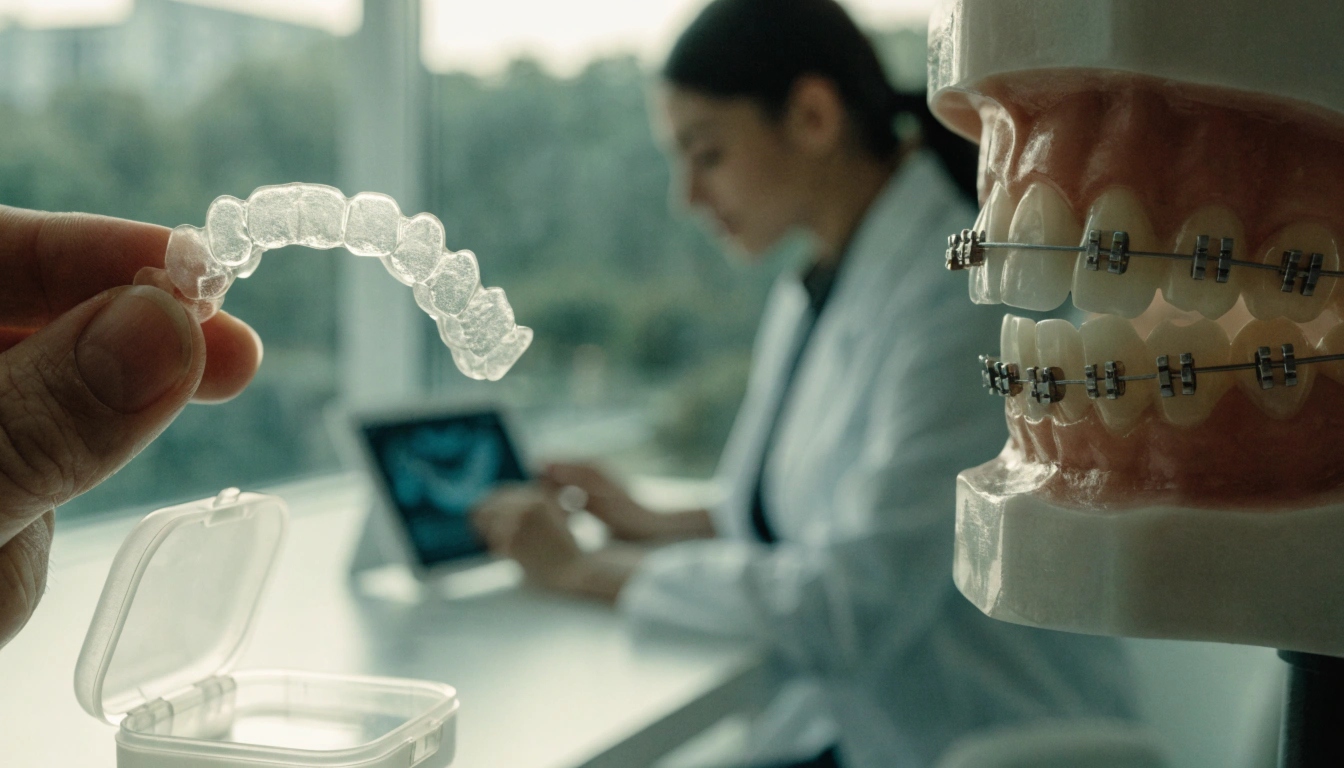
If you’re trying to straighten your teeth, you’ve probably narrowed it down to two choices: Invisalign or traditional braces. Both can give you a straighter smile, but they work in very different ways, and one might fit your lifestyle better than the other.
Invisalign uses clear, removable plastic aligners, while braces use metal or ceramic brackets and wires that stay fixed to your teeth. Invisalign tends to be more comfortable and less noticeable, but braces are often better for more complex bite issues and don’t rely on you remembering to wear anything. The right choice depends on your specific dental needs, budget, and how much responsibility you want to take on during treatment.
Quick Answer
Invisalign works well for mild to moderate alignment issues and appeals to people who want a discreet, removable option. Braces are typically recommended for more complex cases, including severe crowding or bite problems, since they apply constant, controlled pressure without depending on the wearer. Your orthodontist can tell you which option matches your specific teeth and jaw situation after an exam.
How Invisalign Works
Invisalign uses a series of custom-made clear aligners. Each set is worn for a set number of weeks before you switch to the next one in the series. Over time, the aligners gradually shift your teeth into a straighter position.
Because the aligners are removable, you take them out to eat, drink, and brush your teeth. This makes daily hygiene simpler compared to brushing and flossing around fixed brackets and wires.
What Invisalign Treatment Looks Like
Treatment usually starts with a consultation and digital scan of your teeth. From there, a dental lab creates your full series of aligners based on your treatment plan. You’ll visit your provider periodically so they can check your progress and give you your next set of trays.
Since the aligners are removable, success depends heavily on wearing them as directed. Taking them out too often or for too long can slow down your progress.
How Traditional Braces Work
Braces use small brackets bonded to each tooth, connected by a metal wire. The wire is tightened periodically by an orthodontist, which gradually moves teeth into proper alignment. Some people choose ceramic brackets, which blend in more with the natural tooth color, instead of traditional metal ones.
Because braces are fixed in place, there’s no risk of forgetting to wear them. This makes them a reliable option for people who might struggle with the discipline that removable aligners require, including many younger patients.
Comparing Comfort and Appearance
Invisalign aligners are smooth plastic, so they generally cause less irritation to the cheeks and gums compared to metal brackets and wires. They’re also far less noticeable, which is a major reason many adults choose this option.
Braces can cause some soreness after adjustments, and the brackets and wires are visible when you smile or talk. However, modern braces are smaller and less bulky than older versions, and ceramic options offer a more subtle look.
Step-by-Step Guide: Choosing Between Invisalign and Braces
- Schedule a consultation. An orthodontist will examine your teeth, bite, and jaw alignment to determine which treatments are appropriate for your case.
- Discuss your daily habits and lifestyle. If you know you’ll struggle to keep aligners in for the recommended hours each day, mention this so your provider can factor it in.
- Ask about the complexity of your case. Severe crowding, significant gaps, or major bite issues may point toward braces, while mild to moderate issues often work well with Invisalign.
- Review the estimated treatment timeline. Ask your provider how long each option would likely take for your specific situation.
- Talk about cost and payment options. Ask your dental office about what’s typically covered by insurance and what payment plans are available.
- Make your decision with your orthodontist’s guidance. They can help you weigh the pros and cons based on your exam results, not just general information.
Common Problems or Mistakes
Not wearing aligners long enough each day. Invisalign only works if you wear the trays for the amount of time your provider recommends. Skipping this regularly can extend your treatment or affect the results.
Skipping regular checkups. Whether you choose braces or Invisalign, missing follow-up appointments makes it harder for your orthodontist to catch issues early and keep your treatment on track.
Ignoring oral hygiene. Food particles trapped around brackets or bacteria buildup inside aligner trays can lead to cavities or gum irritation if you don’t brush and floss consistently.
Choosing based on appearance alone. Picking Invisalign just because it’s less visible, without considering whether it can actually address your specific dental issue, may lead to disappointing results or a longer treatment process.
Losing or damaging aligners. Because Invisalign trays are removable, they can be misplaced or accidentally thrown away with meal trash. Always store them in their case when they’re not in your mouth.
Helpful Tips
- Keep a consistent routine so wearing your aligners or caring for your braces becomes a habit, not something you have to remember.
- Bring a small dental care kit with you if you travel often, especially if you wear Invisalign and need to remove your trays before meals.
- Ask your orthodontist for a written care schedule so you know exactly when to expect adjustments or new aligner trays.
- Take photos of your teeth every few weeks to track your own progress alongside your provider’s assessments.
- If you experience ongoing pain or unusual symptoms with either option, contact your orthodontist promptly instead of waiting for your next scheduled visit.
Frequently Asked Questions
Q.1 Is Invisalign as effective as braces?
For many mild to moderate cases, Invisalign can be just as effective. For more complex bite or alignment issues, braces are often considered more reliable since they aren’t removable.
Q.2 Does Invisalign or braces hurt more?
Both can cause some discomfort, especially right after a new aligner tray or wire adjustment. Many people find Invisalign slightly more comfortable since there are no metal brackets rubbing against the cheeks.
Q.3 How long does treatment take with each option?
Treatment length varies a lot from person to person, depending on the complexity of the case. Your orthodontist can give you a more accurate estimate after your exam.
Q.4 Can adults use either treatment?
Yes, both options are commonly used by adults. Invisalign is especially popular with adults who want a more discreet treatment for work or social settings.
Q.5 Do I need to remove Invisalign aligners to eat?
Yes, aligners should be removed before eating or drinking anything besides water, then cleaned before putting them back in.
Q.6 Which option is easier to keep clean?
Invisalign is often easier to clean day-to-day since you can brush and floss normally after removing the trays. Braces require more careful brushing around brackets and wires.
Q.7 Can I switch from braces to Invisalign or vice versa?
In some cases, yes, but this depends on your specific treatment progress and needs. Talk to your orthodontist before making any changes.
Conclusion
When comparing Invisalign vs braces, there’s no single “better” option that works for everyone. Invisalign offers a discreet, removable experience that suits people with mild to moderate alignment needs, while braces provide a dependable, fixed solution for more complex cases. The best next step is scheduling a consultation with an orthodontist who can examine your teeth and recommend the option that fits your specific goals, budget, and lifestyle.
Author:
M. Ahmad is an SEO and GEO Specialist and the Founder of Careerzon.org, a platform dedicated to career development and professional growth. He helps readers navigate job searching, resume building, career planning, and skill development through clear, practical, and easy-to-follow guidance. Combining his SEO and GEO expertise with a focus on career content,
Technology Business Incubator Meaning Explained
Technology vs Technician: What’s the Real Difference?
CTO vs CIO: What’s the Real Difference?