
If you’re comparing expendable vs reusable rocket technologies, here’s the short answer: expendable rockets are simpler and often lighter for a single flight, while reusable rockets cost more to build but can fly again, which usually lowers the price per launch over time. Neither one is “better” in every situation — it depends on the mission, the payload, and how many times a company plans to fly that rocket.
This guide breaks down both technologies in plain language, so you can understand why space companies are switching to reusable designs, where expendable rockets still make sense, and what this shift means for the future of spaceflight.
Quick Answer
Expendable rockets are used once and then discarded or destroyed after launch. Reusable rockets are designed to land safely, get refurbished, and fly multiple missions. Reusable rockets typically cost more upfront to develop but reduce long-term launch costs, while expendable rockets keep things simple and can carry slightly heavier payloads since they don’t need extra fuel or hardware for landing.
What Is an Expendable Rocket?
An expendable rocket is a launch vehicle built for a single use. Once it delivers its payload — like a satellite or spacecraft — into orbit, the rocket stages either burn up in the atmosphere or fall into the ocean. Nothing is recovered or reused.
This has been the standard approach in spaceflight for decades. Most of the rockets that carried early satellites, space probes, and even astronauts used this method.
Why Expendable Rockets Were the Standard
Building a rocket that only needs to survive one flight is simpler from an engineering standpoint. Engineers don’t need to design for reentry heat, landing systems, or reusability. This keeps development timelines shorter and avoids the added weight of landing legs, extra fuel reserves, or grid fins.
For missions that only happen once, or for extremely heavy payloads where every bit of extra weight matters, expendable rockets can still be the more practical choice.
What Is a Reusable Rocket?
A reusable rocket is designed to return to Earth in one piece — usually by landing upright on a landing pad or a floating platform — so it can be inspected, refurbished, and launched again.
This approach requires extra systems: fuel for the landing burn, heat shielding for reentry, and structural reinforcement so the rocket can survive multiple flights instead of just one.
Why Companies Are Moving Toward Reusability
The biggest reason companies invest in reusable rockets is cost savings over time. Building a brand-new rocket for every single launch is expensive. If a company can reuse the same booster multiple times, the cost of each individual launch tends to drop, since the most expensive part of the rocket doesn’t need to be rebuilt from scratch.
Reusability also allows companies to launch more frequently, since they’re not always waiting on a full manufacturing cycle for the next rocket.
Expendable vs Reusable: Key Differences That Matter
Cost
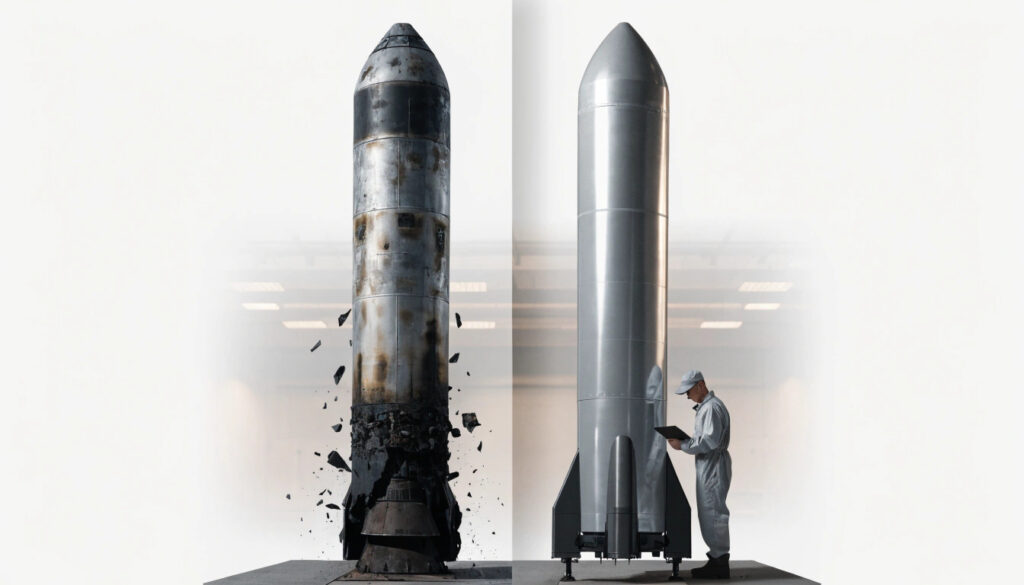
Expendable rockets often cost less to develop initially, but every launch requires a brand-new vehicle. Reusable rockets cost more to design and build at first, but the price per launch can go down significantly once the hardware is flying multiple missions.
Payload Capacity
Because reusable rockets carry extra fuel and equipment for landing, they usually sacrifice some payload capacity compared to an expendable version of the same rocket. For missions that need to send the maximum possible weight into orbit, an expendable rocket configuration can sometimes make more sense.
Turnaround Time
Reusable rockets can potentially be relaunched faster than building a new expendable rocket from the ground up, since major components don’t need to be manufactured again. This can matter a lot for companies trying to increase how often they launch.
Reliability and Risk
Expendable rockets don’t need to survive reentry or landing, which removes one source of risk. Reusable rockets add complexity because the same hardware has to work correctly more than once, which means more systems that need to perform reliably every single time.
Environmental Impact
Reusable rockets reduce the amount of hardware that ends up as debris or waste after each launch, since fewer new parts need to be manufactured for future flights.
Step-by-Step: How a Reusable Rocket Launch Typically Works
- Liftoff – The rocket launches with its payload, just like a traditional expendable rocket.
- Stage Separation – The main booster separates from the upper stage once it has done its job.
- Return Flight – The booster reorients itself and begins its descent back toward Earth.
- Landing Burn – Engines fire again to slow the booster down for a controlled landing.
- Touchdown – The booster lands on a pad or platform instead of falling into the ocean.
- Inspection and Refurbishment – Engineers check the rocket for damage and prepare it for its next flight.
- Reflight – The same booster is used again for a future mission.
Common Problems or Mistakes People Make When Comparing These Technologies
Assuming reusable is always cheaper. Reusability only saves money if the rocket flies multiple times. A reusable rocket that only launches once can actually cost more than an expendable one.
Ignoring payload trade-offs. People often forget that reusable rockets sometimes can’t carry as much weight as their expendable counterparts, since some capacity is used for landing systems.
Thinking expendable technology is outdated. Expendable rockets are still used today for certain missions, especially when payload weight is more important than reusability.
Overlooking development costs. Building a reusable rocket system requires a lot of upfront research and testing, which isn’t always worth it for companies that only launch occasionally.
Helpful Tips for Understanding Rocket Reusability
- Think of it like comparing a rental car to a car you buy outright. One-time use has a lower barrier to entry; long-term use pays off with repetition.
- Pay attention to how many times a booster has flown when comparing launch providers, since that number affects both cost and reliability data.
- Remember that “reusable” doesn’t always mean every single part is reused. Sometimes only the first stage is recovered, while the rest of the rocket is still expendable.
- When researching a specific rocket, check whether it’s flying in expendable mode or reusable mode, since some rockets can be configured either way depending on the mission.
Frequently Asked Questions
Q.1 Is a reusable rocket always cheaper than an expendable one?
Not always. Reusable rockets cost more to build initially. The savings only appear after the rocket has flown multiple missions.
Q.2 Do reusable rockets carry less cargo than expendable rockets?
Often, yes. The extra fuel and hardware needed for landing take up weight that could otherwise be used for payload.
Q.3 Why did the space industry move toward reusable rockets?
Mainly to reduce long-term launch costs and increase how frequently rockets can fly, since companies don’t need to build a brand-new rocket for every mission.
Q.4 Are expendable rockets still used today?
Yes. Some missions, especially those needing maximum payload capacity, still rely on expendable rocket designs.
Q.5 How many times can a reusable rocket fly?
This depends on the specific rocket and how well it holds up after inspection and refurbishment. It varies by design and mission history.
Q.6 Is reusable rocket technology safer than expendable technology?
Not necessarily safer or riskier overall — they have different risk profiles. Expendable rockets avoid the risks of landing, while reusable rockets add complexity but benefit from data gathered across repeated flights.
Q.7 Which technology is better for beginners learning about rockets?
Expendable rockets are usually easier to understand first, since the concept is simpler: launch, deliver payload, and the rocket is gone. Reusable rockets are a good next step once you understand the basics.
Conclusion
When comparing expendable vs reusable rocket technologies, the right choice really comes down to the mission. Expendable rockets keep things simple and can carry heavier payloads, while reusable rockets are built for cost savings and frequent flights over time. As the space industry continues to grow, both approaches are likely to stick around, each serving a different purpose depending on what a mission actually needs.
If you’re exploring careers in aerospace, engineering, or space technology, understanding these fundamentals is a great starting point for building deeper industry knowledge.
Author :
Muhammad Ahmad is an SEO and GEO Specialist and the Founder of Careerzon.org, a platform dedicated to career development and professional growth. He helps readers navigate job searching, resume building, career planning, and skill development through clear, practical, and easy-to-follow guidance. Combining his SEO and GEO expertise with a focus on career content, M. Ahmad ensures Careerzon.org delivers helpful, people-first advice that’s easy to find and easy to understand — whether you’re searching on Google or asking an AI assistant.
Also Read
Veterinary Technology vs Technician: What’s the Difference?
Radiation Therapy vs Radiation Technology: Key Differences
DoD SBIC Critical Technologies Funds Explained (2026 Guide)