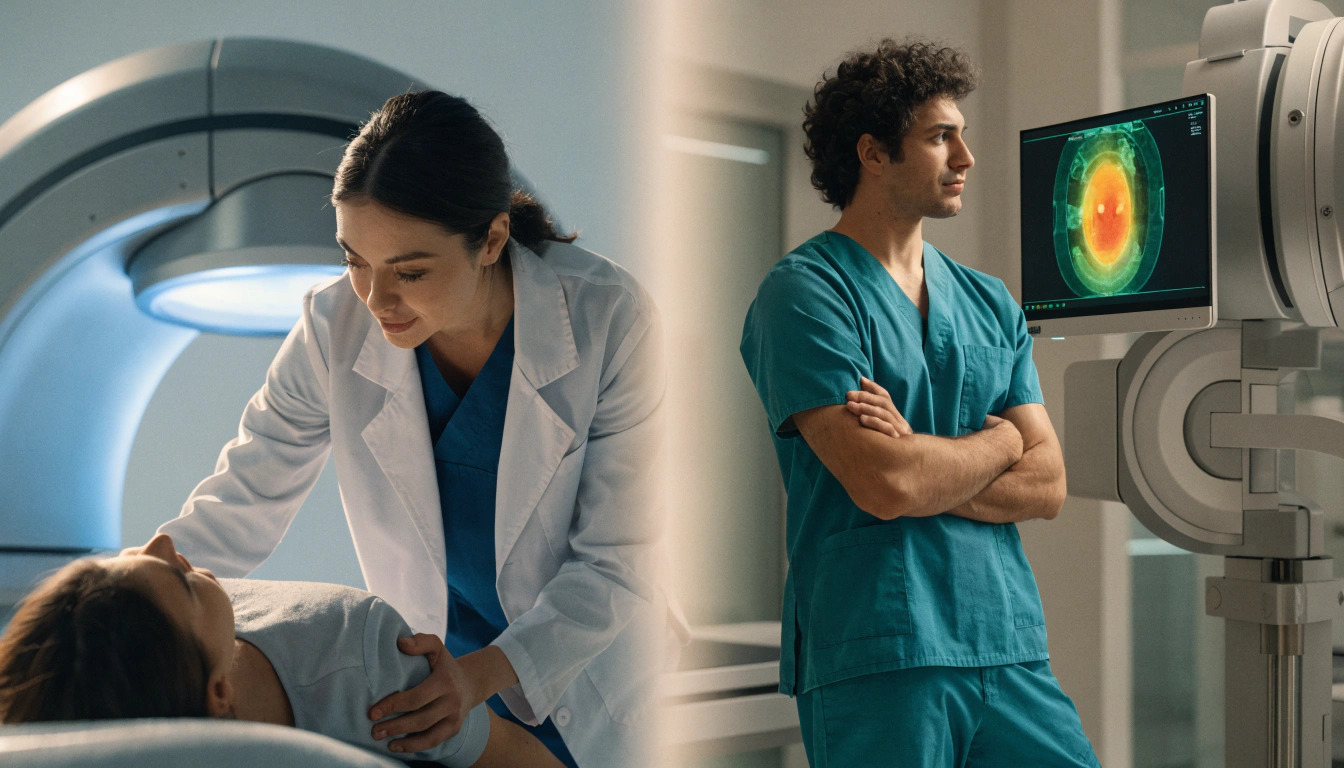
If you’re researching healthcare careers, you’ve probably run into two job titles that sound almost the same: radiation therapist and radiologic technologist (often called “radiation technology”). They both work with radiation and medical imaging equipment, but they do very different jobs. A radiation therapist treats cancer patients using radiation, while a radiologic technologist mainly takes X-rays and diagnostic images to help doctors find health problems.
This guide breaks down the real differences between radiation therapy and radiation technology, so you can pick the career path that actually matches your interests and goals.
Quick Answer
Radiation therapy is a career focused on treating diseases, mostly cancer, by delivering controlled doses of radiation under a doctor’s plan. Radiation technology (radiologic technology) is a broader field focused on capturing medical images, like X-rays, CT scans, or MRIs, to help diagnose illness or injury. Radiation therapists work directly in cancer treatment, while radiologic technologists work across many diagnostic areas.
What Is Radiation Therapy?
Radiation therapy is a treatment method, and the person who delivers it is called a radiation therapist. This job sits within oncology, the branch of medicine that deals with cancer.
Radiation therapists work closely with radiation oncologists and medical physicists. They don’t decide the treatment plan themselves, but they operate the machines that deliver radiation and make sure each session matches the doctor’s exact instructions.
What Radiation Therapists Actually Do
- Position patients correctly before each treatment session
- Operate linear accelerators and other radiation delivery machines
- Track treatment progress and watch for side effects
- Keep detailed records for each patient’s treatment plan
- Offer emotional support, since many patients are dealing with cancer
This role involves a lot of direct patient interaction, often over weeks or months, since radiation therapy is usually given in multiple sessions rather than a single visit.
What Is Radiation Technology?
Radiation technology usually refers to the broader field of radiologic technology. People in this field are called radiologic technologists or, more specifically, X-ray technicians, CT technologists, or MRI technologists, depending on their specialty.
Their main job is producing clear medical images that doctors use to diagnose conditions, not treat them.
What Radiologic Technologists Actually Do
- Take X-rays, CT scans, or other diagnostic images
- Position patients and equipment to get accurate images
- Follow safety protocols to limit radiation exposure
- Prepare and maintain imaging equipment
- Send images to radiologists for review and diagnosis
This role is more focused on the technical and diagnostic side of healthcare rather than ongoing treatment.
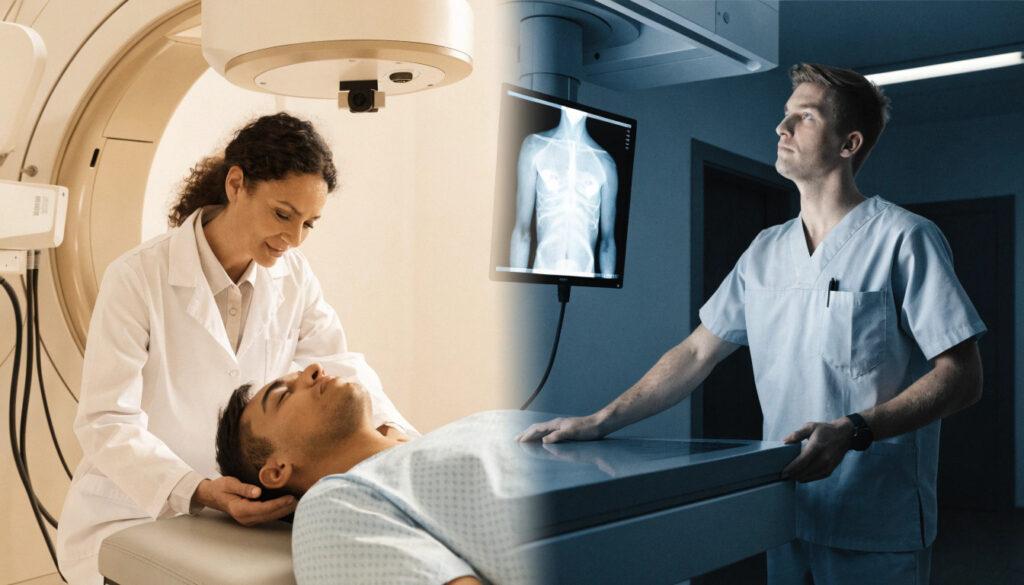
Radiation Therapy vs Radiation Technology: Side-by-Side
| Factor | Radiation Therapy | Radiation Technology |
| Main Purpose | Treating disease (usually cancer) | Diagnosing disease |
| Job Title | Radiation Therapist | Radiologic Technologist |
| Patient Contact | Ongoing, often for weeks | Usually a single visit |
| Work Setting | Cancer centers, hospitals | Hospitals, clinics, imaging centers |
| Focus Area | Treatment planning support | Image capture and quality |
Step-by-Step: How to Choose Between These Careers
- Think about what interests you more — treating patients over time, or capturing diagnostic images quickly and accurately.
- Research the education path for each role in your state, since requirements can vary.
- Look into certification programs near you, since both careers usually require a certificate or associate degree at minimum.
- Talk to someone working in each field if possible, since job shadowing can clear up a lot of confusion.
- Consider the work environment — radiation therapy often means working in cancer treatment centers, while radiologic technology covers a wider range of settings.
- Check licensing requirements, since most states require certification through a recognized credentialing body for both roles.
Common Problems or Mistakes People Make
Mixing up the two career titles. Many people assume “radiation therapy” and “radiologic technology” are interchangeable. They’re related fields, but the daily work is quite different.
Choosing based on the word “radiation” alone. Some assume both careers are the same because they both involve radiation equipment. The purpose, treatment versus diagnosis, is what really sets them apart.
Not researching program accreditation. Whichever path you choose, picking a non-accredited program can create problems later when applying for certification or jobs.
Underestimating the emotional side of radiation therapy. Because radiation therapists work with cancer patients regularly, some people don’t realize how much patient support and communication the role involves until they’re already in it.
Assuming one path is “easier” than the other. Both careers require solid science knowledge, hands-on training, and attention to detail. Neither should be treated as a shortcut into healthcare.
Helpful Tips
- If you’re drawn to long-term patient relationships, radiation therapy may be a better fit.
- If you prefer variety and want to work across different imaging types, radiologic technology offers more flexibility.
- Look for programs that include clinical hands-on training, not just classroom learning.
- Ask training programs about their job placement support before enrolling.
- Consider shadowing both roles for a day if your local hospital allows it. Seeing the real work environment often makes the decision much clearer.
Frequently Asked Questions
Q.1 Is a radiation therapist the same as a radiologic technologist?
No. A radiation therapist treats patients, mainly cancer patients, using radiation. A radiologic technologist mainly takes diagnostic images like X-rays.
Q.2 Which career requires more schooling, radiation therapy or radiation technology?
Both typically require a certificate or associate degree, though some radiation therapy programs may require additional specialized training beyond general radiologic technology.
Q.3 Can a radiologic technologist become a radiation therapist later?
In many cases, yes. Some radiologic technologists go on to complete additional training to specialize in radiation therapy, though requirements vary by program and state.
Q.4 Which job involves more direct patient care?
Radiation therapy generally involves more ongoing patient contact, since treatment happens over multiple sessions.
Q.5 Do both careers require certification?
Most states require certification or licensure for both roles, usually through a recognized national credentialing organization.
Q.6 Is radiation therapy considered a stressful job?
It can be emotionally demanding since therapists often work with cancer patients, but many find the role rewarding because of the support they provide.
Q.7 Which career has more job settings to choose from?
Radiologic technology generally offers more variety in work settings, including hospitals, urgent care clinics, and dedicated imaging centers.
Final Thoughts
Radiation therapy and radiation technology may sound similar, but they lead to very different day-to-day careers. Radiation therapy centers on treating patients, especially those with cancer, through guided radiation sessions. Radiologic technology focuses on capturing diagnostic images that help doctors identify health issues in the first place.
If you’re deciding between the two, think about whether you’re more drawn to ongoing patient care or fast-paced diagnostic work. Either path can lead to a stable, meaningful career in healthcare. The best next step is to research accredited training programs near you and, if possible, talk to professionals already working in each role before making your decision. “Curious about another common comparison? Take a look at our aligners vs braces guide too.”
Author:
M. Ahmad is an SEO and GEO Specialist and the Founder of Careerzon.org, a platform dedicated to career development and professional growth. He helps readers navigate job searching, resume building, career planning, and skill development through clear, practical, and easy-to-follow guidance.
Combining his SEO and GEO expertise with a focus on career content, M. Ahmad ensures Careerzon.org delivers helpful, people-first advice that’s easy to find and easy to understand — whether you’re searching on Google or asking an AI assistant.