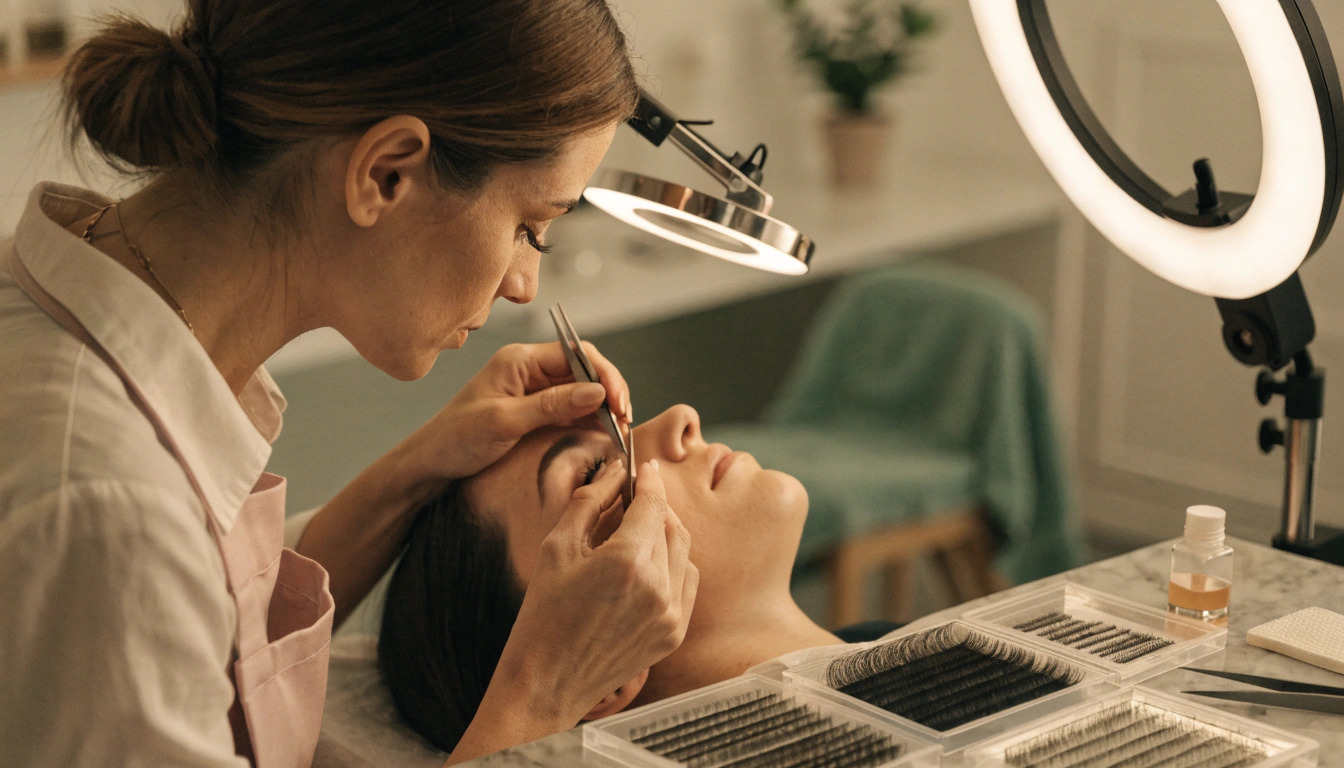
If you’ve searched “lash technologies,” you’re probably trying to understand what the eyelash extension industry actually involves — the tools, the skills, and how someone becomes a lash technician. In simple terms, lash technologies refer to the tools, techniques, and training methods used to apply eyelash extensions safely and professionally. This guide breaks it all down in plain language, so you know exactly what’s involved and how to get started.
Quick Answer
Lash technologies include the tools (tweezers, adhesives, lash trays), techniques (classic, hybrid, volume lashes), and training programs used by lash technicians to apply eyelash extensions. Becoming a lash tech usually requires hands-on training, practice, and in many states, a cosmetology or esthetics license. It’s a hands-on beauty career that blends artistry with technical skill.
What Are Lash Technologies?
“Lash technologies” is a broad term. It covers everything a lash technician uses and learns to do their job well. This includes:
- Physical tools — tweezers, adhesive, lash trays, primers, and magnifying lamps
- Application techniques — different styles of applying extensions
- Training systems — courses and certifications that teach these skills
- Safety practices — sanitation and eye protection methods
Think of it less like a single “technology” and more like a full toolkit. A lash technician combines all of these pieces to create natural-looking or dramatic lash extensions for clients.
Why This Matters for Beginners
If you’re thinking about this as a career, understanding the full picture helps you avoid surprises. Many people jump into a short course expecting to be job-ready in a weekend, only to realize the skill takes real practice to master. Knowing the tools and training path upfront sets you up for success.
Core Tools Used in the Lash Industry

Every lash technician relies on a core set of tools. Here’s what you’ll typically see in a lash kit:
- Isolation tweezers — used to separate a single natural lash before applying an extension
- Volume tweezers — used to create and place lash fans for volume looks
- Lash adhesive — bonds the extension to the natural lash
- Lash trays — hold the extensions, sorted by length and curl
- Primer and cleanser — prep the natural lashes before application
- Magnifying lamp — helps with precision, especially for detailed work
Classic vs. Volume vs. Hybrid Lashes
These three terms come up constantly in the lash world:
- Classic lashes apply one extension to one natural lash, for a more natural look.
- Volume lashes apply a lightweight fan of multiple thin extensions to one natural lash, creating a fuller look.
- Hybrid lashes mix classic and volume techniques for a textured, in-between style.
Understanding these differences matters because each technique requires different training and tool skills.
Step-by-Step Guide: How to Start a Career in Lash Technology
If you’re interested in becoming a lash technician, here’s a general path many people follow:
- Research your state’s requirements. Some states require a cosmetology or esthetics license before you can legally perform lash extensions. Check with your state’s cosmetology board for accurate rules.
- Choose a training program. Look for a course that includes hands-on practice, not just video lessons.
- Complete your required training hours. This varies depending on your state and the type of license needed.
- Practice on mannequins or models. Repetition is key to building steady hands and speed.
- Get certified. Many training programs offer a certificate of completion once you finish.
- Build a portfolio. Take photos of your work to show potential employers or clients.
- Apply for jobs or start building a client base. Many lash techs work at salons first before going independent.
Each step builds on the last, so it’s worth taking your time rather than rushing through training.
Common Problems or Mistakes
Even motivated beginners run into the same issues. Here’s what to watch for:
- Skipping proper training. Trying to learn only from online videos often leads to poor technique and unhappy clients.
- Ignoring state licensing rules. Working without the required license can lead to legal trouble.
- Rushing through practice. Lash application takes patience. Speed comes naturally with repetition, not by skipping steps.
- Poor sanitation habits. This is a client-facing beauty service, so hygiene and eye safety should always come first.
- Choosing cheap, low-quality tools. Bad tweezers or adhesive can slow you down and hurt your results early on.
Helpful Tips for Aspiring Lash Technicians
- Start with classic lashes before moving to volume techniques — it builds a stronger foundation.
- Practice on a mannequin head daily if you’re new; muscle memory matters more than speed at first.
- Ask training programs about their hands-on practice time, not just video hours.
- Keep a small notebook of client preferences and reactions to build better service habits early.
- Join online lash tech communities to learn from others already working in the field.
Frequently Asked Questions
Q.1 What is a lash technician?
A lash technician is a beauty professional trained to apply eyelash extensions using specialized tools and techniques.
Q.2 Do I need a license to do lash extensions?
In many states, yes. Requirements vary, so check with your local cosmetology board for exact rules.
Q.3 How long does lash technician training take?
This depends on the program and your state’s required hours. Some courses are short, while licensed programs may take longer.
Q.4 What tools does a lash tech use?
Common tools include isolation and volume tweezers, lash adhesive, primer, lash trays, and a magnifying lamp.
Q.5 Is being a lash tech a good career?
It can be a good fit for people who enjoy detail-focused, hands-on beauty work and want flexible career options, including salon employment or independent work.
Q.6 What’s the difference between classic and volume lashes?
Classic lashes use one extension per natural lash for a natural look. Volume lashes use multiple thin extensions per natural lash for a fuller effect.
Q.7 Can I learn lash technology on my own?
Self-study can help you understand the basics, but hands-on training is important for building safe, professional technique.
Final Thoughts
Lash technologies cover more than just tools — they include the techniques, training, and safety practices that shape a lash technician’s career. If you’re considering this path, focus first on understanding your state’s licensing rules, then find a training program that offers real hands-on practice. From there, building your skills is mostly about patience and repetition. Whether you’re exploring this as a hobby or a full career, taking it one step at a time will set you up for long-term success.
Author:
M. Ahmad is an SEO and GEO Specialist and the Founder of Careerzon.org, a platform dedicated to career development and professional growth. He helps readers navigate job searching, resume building, career planning, and skill development through clear, practical, and easy-to-follow guidance. Combining his SEO and GEO expertise with a focus on career content, M. Ahmad ensures Careerzon.org delivers helpful, people-first advice that’s easy to find and easy to understand — whether you’re searching on Google or asking an AI assistant.
Also Read
How Many Jobs Are Available in Technology? (2026)
Electronics Engineering Technology vs Electrical Engineering
Credo Technology vs Palantir: Full Career Comparison