
If you’re comparing electronics engineering technology vs electrical engineering, here’s the short answer: electrical engineering (EE) focuses on theory, design, and math-heavy problem solving, while electronics engineering technology (EET) focuses on applying existing electrical systems in hands-on, practical settings. Both can lead to solid careers, but they train you for different roles.
Picking between the two can feel confusing because the names look almost identical. But once you understand what each program actually teaches — and what kind of job you’ll be doing afterward — the choice gets a lot easier.
Quick Answer
Electrical engineering is a theory-based, math-intensive degree that prepares you to design and invent new electrical systems. Electronics engineering technology is a more hands-on, applied degree that prepares you to build, test, install, and maintain those systems. EE typically requires a 4-year bachelor’s degree with heavy calculus and physics, while EET can be a 2-year associate degree or a 4-year bachelor’s with less advanced math and more lab work.
What Electrical Engineering Actually Involves
Electrical engineering is the traditional engineering degree. It’s built around understanding why electrical systems work the way they do, not just how to use them.
Students take multiple semesters of calculus, differential equations, and physics. The coursework leans heavily on theory: circuit design, electromagnetics, control systems, and signal processing.
EE graduates are trained to design new products and systems — things like microchips, power grids, communication devices, or robotics systems. Many go on to work as design engineers, systems engineers, or hardware engineers.
Who EE Is Best For
If you enjoy solving abstract math problems and want to eventually design new technology from scratch, EE is usually the better fit. It also opens the door to graduate school and, in most states, licensure as a Professional Engineer (PE).
What Electronics Engineering Technology Actually Involves
Electronics engineering technology takes a more practical approach. Instead of spending years proving why a circuit behaves a certain way, EET students learn to apply proven electrical concepts to real-world tasks.
The coursework still includes math and circuit theory, but it’s usually algebra- and trigonometry-based rather than calculus-heavy. Programs put more emphasis on labs, hands-on testing, and using industry equipment.
EET graduates often work as electronics technicians, field engineers, test engineers, or engineering technologists. Their day-to-day work involves installing, troubleshooting, maintaining, and improving systems that already exist.
Who EET Is Best For
If you prefer hands-on work over heavy math theory, and you want to start working sooner with a shorter or more applied degree path, EET can be a strong, practical choice.
Electronics Engineering Technology vs Electrical Engineering: Key Differences
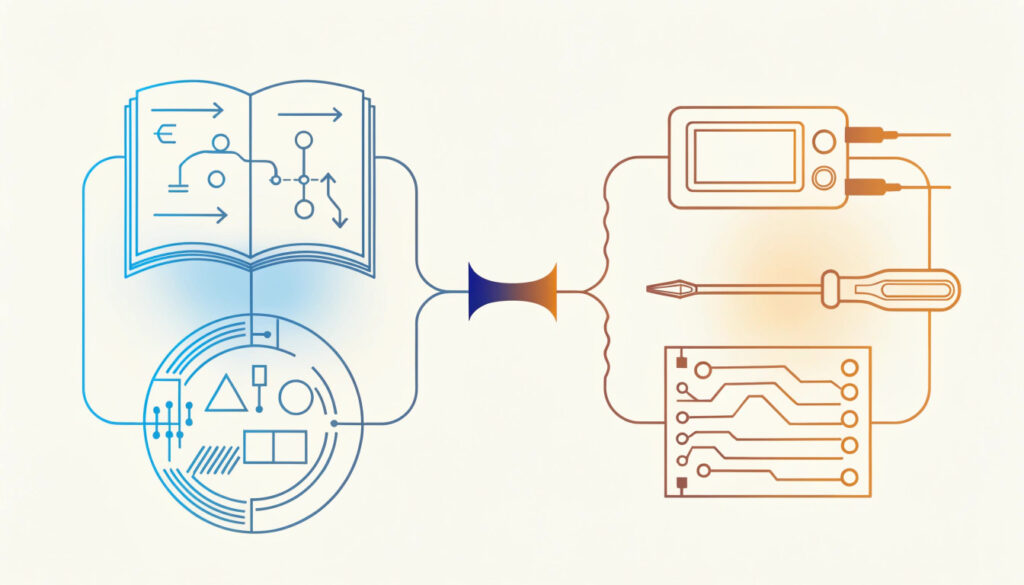
| Factor | Electrical Engineering (EE) | Electronics Engineering Technology (EET) |
| Degree focus | Theory and design | Application and hands-on work |
| Math level | Calculus, differential equations | Algebra, trigonometry |
| Typical degree | 4-year bachelor’s | 2-year associate or 4-year bachelor’s |
| Work style | Designing new systems | Building, testing, maintaining systems |
| Licensure (PE) | Common path | Limited or restricted in most states |
| Common job titles | Design engineer, hardware engineer | Electronics technician, field engineer |
Step-by-Step: How to Choose the Right Path
- Think about how you enjoy solving problems. If abstract math and theory excite you, lean toward EE. If you’d rather work with your hands and see immediate results, lean toward EET.
- Check your target job titles. Search job listings for roles you want and see which degree is listed as a requirement.
- Consider licensure goals. If becoming a licensed Professional Engineer matters to you, EE is the more direct route.
- Compare program length and cost. EET programs can be shorter and more affordable, especially at the associate degree level.
- Talk to an academic advisor. Ask specifically about transfer options between EET and EE programs at your school.
Common Problems or Mistakes
Mistake 1: Assuming the degrees are interchangeable. Because the names sound alike, some students assume employers treat them the same. In many companies, especially engineering-heavy ones, they’re viewed as different roles with different expectations.
Mistake 2: Ignoring licensure requirements early. If you know you want to become a licensed PE, choosing EET first without checking your state’s rules can create extra hurdles later.
Mistake 3: Picking based on the “harder” degree instead of fit. EE isn’t automatically the “better” choice for everyone. A student who struggles with heavy theoretical math but thrives in hands-on labs may actually build a stronger, more satisfying career through EET.
Mistake 4: Not checking accreditation. Not all EE and EET programs are accredited the same way. Before enrolling, confirm your program’s accreditation status, since this can affect job eligibility and future licensure.
Helpful Tips
- If you’re unsure which path fits, start with EET. Many schools allow credits to apply toward a later EE bachelor’s degree.
- Ask current professionals in both fields what their day-to-day work actually looks like — job titles alone don’t tell the full story.
- Look at your local job market. Some regions have stronger demand for hands-on technicians, while others have more openings for design-focused engineers.
- Don’t choose based only on salary. Job satisfaction and daily work style matter just as much for long-term career happiness.
Frequently Asked Questions
Q.1 Is electronics engineering technology the same as electrical engineering?
No. EE is a theory-based design degree, while EET is a more hands-on, application-based degree. They lead to related but different career paths.
Q.2 Can I become a licensed Professional Engineer (PE) with an EET degree?
In most states, PE licensure paths are built around EE degrees. EET graduates may face more limitations, so it’s important to check your state’s specific requirements early.
Q.3 Which pays more, EE or EET?
Pay varies widely by employer, location, and experience. In general, design-focused EE roles tend to offer higher long-term earning potential, while EET roles often provide quicker entry into the workforce.
Q.4 Is EET easier than EE?
EET typically involves less advanced math, but “easier” depends on your strengths. Hands-on lab work in EET has its own challenges that differ from EE’s theory-heavy coursework.
Q.5 Can I transfer from an EET program into an EE bachelor’s degree?
Often, yes, but not always with a full credit transfer. Talk to an academic advisor about how your specific EET credits apply to a 4-year EE program.
Q.6 What jobs can I get with an EET degree?
Common roles include electronics technician, field service engineer, test engineer, and engineering technologist positions across manufacturing, telecom, and electronics industries.
Q.7 Is EET a good degree to pursue?
Yes, especially if you enjoy hands-on, practical work and want a faster or more affordable path into the electronics field.
Final Thoughts
Choosing between electronics engineering technology vs electrical engineering really comes down to how you like to work. EE is the right fit if you’re drawn to math, theory, and designing new systems from the ground up. EET is the right fit if you prefer applied, hands-on work and want a more direct route into the field.
Neither path is “better” — they’re built for different strengths and goals. The best next step is to compare a few real program curriculums, talk to an advisor, and think honestly about whether you enjoy theory or hands-on problem solving more.
Author ;
Muhammad Ahmad is an SEO and GEO Specialist and the Founder of Careerzon.org, a platform dedicated to career development and professional growth. He helps readers navigate job searching, resume building, career planning, and skill development through clear, practical, and easy-to-follow guidance. Combining his SEO and GEO expertise with a focus on career
Also Read
Credo Technology vs Palantir: Full Career Comparison
Best Platform for Freelance AI Data Annotation
Expendable vs Reusable Rockets: Which Wins? (2026)